Artificial intelligence has revolutionized digital art and image creation. Today, anyone can generate cinematic portraits, realistic product ads, fantasy worlds, or futuristic scenes within seconds using AI image generators. However, one major difference separates amateur-looking AI images from professional-quality visuals:
Lighting and camera angles.
Most beginners focus only on the subject of the image and ignore the cinematic elements that make visuals feel realistic and emotionally powerful. In photography, filmmaking, and digital art, lighting and composition are everything—and the same applies to AI-generated images.
If you want your AI images to look stunning, realistic, dramatic, or cinematic, understanding how lighting and camera angles work is essential.
In this complete beginner-friendly guide, you’ll learn how lighting and camera positioning affect AI images, how to use them effectively in prompts, and how professionals create visually striking AI-generated artwork.
Why Lighting Matters in AI Images
Lighting is one of the most important visual elements in any image. It controls:
Mood
Atmosphere
Realism
Depth
Focus
Emotion
Even the same subject can look completely different depending on the lighting style.
For example:
Soft lighting creates calm and elegance
Harsh lighting creates tension and drama
Golden hour lighting feels warm and cinematic
Neon lighting creates futuristic cyberpunk vibes
AI image generators respond strongly to lighting keywords because lighting dramatically changes how objects, textures, and environments appear.
How AI Understands Lighting
AI models are trained on millions of images. During training, they learn visual patterns associated with lighting conditions.
When you include phrases like:
“cinematic lighting”
“soft shadows”
“golden hour”
“studio lighting”
the AI uses learned patterns to simulate those visual characteristics.
This means lighting prompts act like instructions for the image’s emotional and visual atmosphere.
Types of Lighting Used in AI Image Prompts
Understanding different lighting styles helps you gain more control over AI-generated visuals.
1. Soft Lighting
Soft lighting creates smooth shadows and gentle transitions.
Characteristics:
Clean look
Natural skin tones
Calm atmosphere
Professional appearance
Best For:
Portraits
Beauty photography
Lifestyle images
Example Prompt:
“A hyper-realistic portrait with soft lighting and smooth shadows”
Soft lighting is one of the safest and most versatile lighting styles for beginners.
2. Cinematic Lighting
Cinematic lighting creates dramatic contrast similar to movies.
Characteristics:
High contrast
Moody atmosphere
Strong highlights and shadows
Best For:
Movie-style scenes
Action shots
Storytelling visuals
Example:
“Cinematic lighting with dramatic shadows and atmospheric depth”
This is one of the most popular keywords in AI art generation.
3. Golden Hour Lighting
Golden hour refers to the warm sunlight shortly after sunrise or before sunset.
Characteristics:
Warm orange tones
Soft natural glow
Romantic atmosphere
Best For:
Landscapes
Portraits
Travel photography
Example:
“Golden hour lighting with warm cinematic sunlight”
Golden hour instantly improves image aesthetics.
4. Neon Lighting
Neon lighting creates futuristic urban visuals.
Characteristics:
Bright glowing colors
Cyberpunk atmosphere
High contrast reflections
Best For:
Futuristic scenes
Cyberpunk art
Night city environments
Example:
“Neon lighting with blue and pink reflections on wet streets”
5. Studio Lighting
Studio lighting simulates professional photography environments.
Characteristics:
Controlled shadows
Clean highlights
Sharp details
Best For:
Product photography
Fashion photography
Commercial ads
Example:
“Professional studio lighting with sharp focus”
6. Backlighting
Backlighting places the light source behind the subject.
Characteristics:
Silhouettes
Glowing edges
Dramatic depth
Example:
“Backlit portrait with glowing rim light”
7. Rim Lighting
Rim lighting creates a bright outline around the subject.
Characteristics:
Subject separation
Cinematic glow
Enhanced depth
Best For:
Character art
Sci-fi scenes
Dark environments
Why Camera Angles Matter in AI Images
Camera angle determines how the viewer experiences the scene.
It affects:
Perspective
Emotion
Power dynamics
Realism
Composition
The same subject can feel:
Powerful
Weak
Intimate
Dramatic
Cinematic
depending on camera positioning.
Common Camera Angles in AI Image Prompts
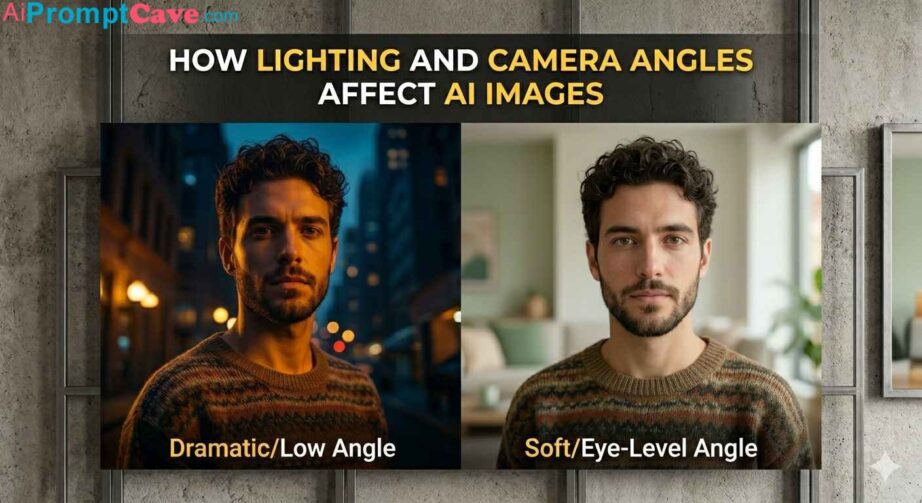
1. Eye-Level Shot
The camera is positioned at eye level.
Effect:
Natural
Balanced
Realistic
Best For:
Portraits
Everyday photography
Neutral compositions
Example:
“Eye-level portrait with soft lighting”
2. Low Angle Shot
The camera looks upward at the subject.
Effect:
Makes subject appear powerful
Adds dominance and drama
Best For:
Superheroes
Cars
Action scenes
Example:
“Low angle shot of a futuristic sports car”
Low angles make images feel cinematic and dynamic.
3. High Angle Shot
The camera looks downward at the subject.
Effect:
Makes subject appear smaller or vulnerable
Adds storytelling depth
Example:
“High angle shot of a lonely traveler”
4. Close-Up Shot
Focuses tightly on the subject.
Effect:
Emotional intensity
Detail emphasis
Best For:
Portraits
Beauty shots
Product photography
Example:
“Extreme close-up portrait with shallow depth of field”
5. Wide-Angle Shot
Captures a broader environment.
Effect:
Epic scale
Environmental storytelling
Best For:
Landscapes
Architecture
Cinematic scenes
Example:
“Wide-angle shot of a futuristic city”
6. Overhead Shot
The camera looks directly from above.
Effect:
Artistic composition
Unique perspective
Best For:
Food photography
Flat lays
Creative visuals
7. Dutch Angle
The camera is tilted diagonally.
Effect:
Tension
Uneasiness
Dynamic movement
Best For:
Thriller scenes
Cyberpunk art
Action visuals
Combining Lighting and Camera Angles
The true magic happens when lighting and camera angles work together.