
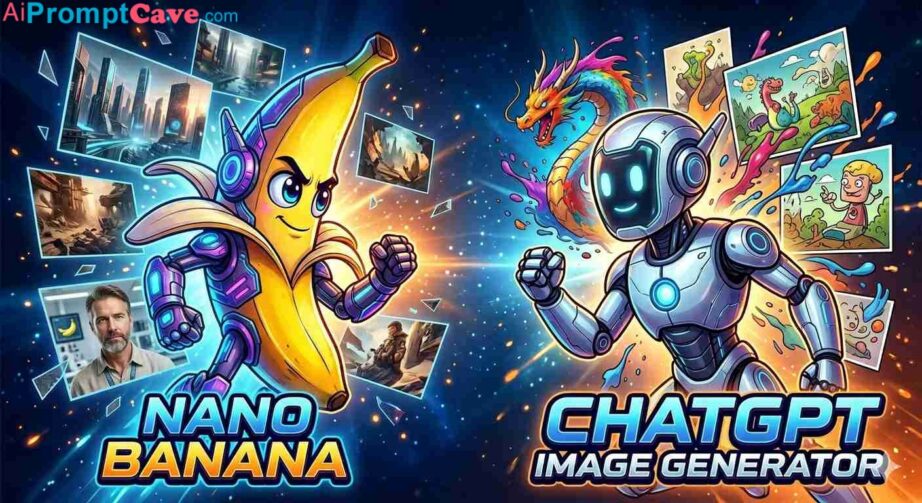
Artificial intelligence image generation is evolving faster than ever. What once required expensive design software, professional photographers, and advanced editing skills can now be done with a simple text prompt.
Among the growing number of AI image tools, two names are generating serious attention:
- Nano Banana (Google’s Gemini-powered image editing system)
- ChatGPT Image Generator (OpenAI’s built-in AI image generation system)
Both tools are powerful.
Both can generate impressive visuals.
But they are designed with slightly different strengths and workflows.
If you’re wondering:
Which tool is better?
The answer depends on what you want to create.
Are you focused on:
- image editing?
- realistic marketing visuals?
- character consistency?
- creative ideation?
- cinematic AI art?
- product advertising?
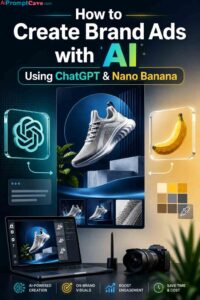
In this detailed comparison, we’ll break down the differences between Nano Banana vs ChatGPT Image Generator, their strengths, weaknesses, and best use cases.
What Is Nano Banana?
Nano Banana is Google’s AI image editing and generation system integrated into Gemini.
Its biggest strength lies in:
context-aware image editing.
Instead of only generating visuals from scratch, Nano Banana excels at:
- editing existing images
- preserving identity
- changing environments
- maintaining visual consistency
- refining scenes over multiple edits
You can upload an image and say:
“Turn this into a luxury fashion campaign while keeping the same person.”
And Nano Banana often performs surprisingly well.
It is especially useful for:
- creators
- marketers
- ecommerce brands
- storytellers
- product advertisers
What Is ChatGPT Image Generator?
The ChatGPT Image Generator is OpenAI’s integrated image creation system built directly into ChatGPT.
Unlike standalone image tools, ChatGPT combines:
conversation + prompt refinement + image generation
This creates a different experience.
Instead of simply typing prompts into a generator, you can:
- brainstorm ideas
- refine prompts
- troubleshoot results
- edit images conversationally
This makes ChatGPT especially beginner-friendly.
You can ask:
“Make this ad feel more luxury.”
Then continue refining.
Its strengths include:
- creative ideation
- prompt optimization
- commercial visuals
- conceptual artwork
- iterative improvements
Core Difference Between Both Tools
At a high level:
Nano Banana
Better for editing existing images and consistency.
ChatGPT Image Generator
Better for creative prompting and conversational generation.
Think of it like this:
Nano Banana behaves more like an intelligent editor.
ChatGPT behaves more like a creative art director.
User Experience Comparison
Nano Banana Experience
Nano Banana feels more image-focused.
Workflow often looks like:
- Upload image
- Describe edits
- Refine results
Best for:
“Modify this image.”
Example:
“Replace the background with a luxury café but keep the person unchanged.”
ChatGPT Experience
ChatGPT feels more collaborative.
Workflow:
- Discuss idea
- Refine prompt
- Generate image
- Improve through conversation
Best for:
“Help me create this concept.”
Example:
“I want a futuristic luxury skincare campaign.”
Then ChatGPT helps shape the direction.
This conversational layer is a major advantage.
Which Tool Is Better for Beginners?
Winner: ChatGPT Image Generator
Why?
Because beginners often struggle with:
- prompts
- structure
- visual language
ChatGPT helps guide users.
You can literally ask:
“Why does this image look bad?”
Or:
“Improve this prompt.”
Nano Banana assumes you already know what you want.
ChatGPT acts more like a mentor.
Which Tool Is Better for Image Editing?
Winner: Nano Banana
Nano Banana is significantly stronger for:
- editing photos
- changing backgrounds
- object replacement
- preserving realism
- multi-step refinements
Example:
You upload a gaming chair image.
Prompt:
“Transform this into a premium black-and-gold luxury campaign.”
Nano Banana often handles this extremely well.
ChatGPT can edit too, but Nano Banana is generally more specialized in image modification workflows.
Character Consistency
One of the hardest problems in AI image generation is:
Keeping the same character consistent.
Nano Banana performs surprisingly well here.
Example:
Same person across:
- different outfits
- environments
- poses
Nano Banana often preserves:
- face shape
- identity
- hairstyle
- proportions
ChatGPT can sometimes drift more creatively.
Winner: Nano Banana
Especially for:
- influencers
- storytelling
- brand mascots
- recurring characters
Prompting Experience
Winner: ChatGPT
ChatGPT has a huge advantage:
prompt refinement.
Instead of struggling alone, users can ask:
“Improve my prompt.”
Or:
“Make this feel cinematic.”
Or:
“Why does this look unrealistic?”
This conversational prompting dramatically improves results.
Nano Banana relies more heavily on prompt quality from the beginning.
Realism Comparison
Both tools can generate realism—but differently.
Nano Banana
Strong at:
- realistic editing
- believable composites
- maintaining photo realism
Especially for:
- product photography
- face preservation
- ad enhancements
ChatGPT
Strong at:
- commercial realism
- cinematic visuals
- stylized realism
Especially when prompt quality is strong.
Result:
Realistic Editing → Nano Banana
Realistic Generation → ChatGPT
Commercial Advertising Quality
This category matters for marketers.
Nano Banana
Excellent for:
- product transformations
- ad redesigns
- visual upgrades
Example:
Turning a mediocre ecommerce image into premium advertising.
ChatGPT
Excellent for:
- campaign ideation
- luxury concepts
- billboard visuals
- cinematic product ads
Especially useful for creating completely new campaigns.
Winner: Tie
Depends on workflow.
Product Photography
For ecommerce and brands:
Nano Banana
Very strong for:
- enhancing existing products
- fixing poor photos
- premium upgrades
Example:
Turning a basic product photo into a luxury commercial image.
ChatGPT
Strong for:
- conceptual product visuals
- premium mockups
- ad campaigns from scratch
Winner
Editing existing products → Nano Banana
Creating concepts → ChatGPT
Creative Freedom
Winner: ChatGPT
ChatGPT is more flexible creatively.
You can brainstorm endlessly.
Example:
Create a luxury perfume campaign inspired by futuristic architecture and cinematic lighting.
Then refine:
Make it darker.
Then:
Add premium black marble.
Conversation improves creativity.
Nano Banana feels more direct and execution-focused.
Speed & Workflow
Nano Banana
Faster for quick edits.
ChatGPT
Better for strategic refinement.
Nano Banana:
“Edit this.”
ChatGPT:
“Let’s design this.”
Different experiences.
Prompt Complexity
Nano Banana prefers:
precise editing instructions.
ChatGPT handles:
broader creative prompting.
Example:
Nano Banana:
Change jacket color to black leather.
ChatGPT:
Create a futuristic luxury fashion campaign.
Different strengths.
Best Tool for Marketing Campaigns
Winner: ChatGPT
Because marketing requires:
- concepts
- storytelling
- creative direction
- copy refinement
ChatGPT helps build campaigns holistically.
You can brainstorm:
- slogans
- ad ideas
- visual direction
- prompt structures
All inside one conversation.
Best Tool for Ecommerce Sellers
Winner: Nano Banana
Why?
Ecommerce sellers often need:
better versions of existing images.
Nano Banana excels here.
Example:
Upload a mediocre product image.
Prompt:
Improve lighting, enhance realism, create premium ecommerce style.
Excellent use case.
Best Tool for Social Media Creators
Winner: ChatGPT
Social creators need:
- fast ideas
- creative flexibility
- prompt experimentation
ChatGPT helps brainstorm quickly.
Learning Curve
Easier:
ChatGPT
Harder:
Nano Banana
Why?
Nano Banana rewards precision.
ChatGPT teaches while generating.
This matters for beginners.
Weaknesses of Nano Banana
Can Overedit Images
Sometimes changes too much.
Requires Better Prompting
Weak prompts create weak edits.
Less Conversational
Not ideal for brainstorming.
Weaknesses of ChatGPT Image Generator
Can Be More Creative Than Expected
Sometimes drifts stylistically.
Character Consistency Can Vary
Not always perfect across multiple scenes.
Editing Existing Images Is Less Specialized
Compared to Nano Banana.
Which One Creates Better Luxury Ads?
Slight Edge: ChatGPT
Especially for:
- cinematic campaigns
- premium product visuals
- futuristic concepts
Its creative flexibility helps.
But Nano Banana wins if improving existing ad assets.
Which Tool Is Better for Realistic Faces?
Nano Banana
Especially when editing uploaded portraits.
Face preservation is stronger.
Which One Is Better for AI Beginners?
ChatGPT
Because you can ask:
Help me.
That matters.
Beginners usually need:
- education
- prompt guidance
- troubleshooting
ChatGPT simplifies the learning process.
Pro Workflow: Use Both Together
Many advanced creators combine both.
Step 1 — ChatGPT
Brainstorm ideas.
Generate prompts.
Refine concepts.
Step 2 — Nano Banana
Edit visuals.
Improve realism.
Preserve consistency.
This combination works extremely well.
Quick Comparison Table
| Category | Winner |
|---|---|
| Beginners | ChatGPT |
| Image Editing | Nano Banana |
| Character Consistency | Nano Banana |
| Creative Prompting | ChatGPT |
| Marketing Campaigns | ChatGPT |
| Ecommerce Images | Nano Banana |
| Product Enhancement | Nano Banana |
| Concept Design | ChatGPT |
| Brainstorming | ChatGPT |
| Realistic Editing | Nano Banana |
Who Should Choose Nano Banana?
Choose Nano Banana if you:
- edit existing images
- want realistic upgrades
- need consistency
- work with products
- build recurring characters
Who Should Choose ChatGPT Image Generator?
Choose ChatGPT if you:
- want creative ideas
- need prompt help
- build campaigns
- brainstorm concepts
- enjoy conversational workflows
Final Thoughts
There is no single winner.
The better question is:
What are you trying to create?
If your goal is:
Precise editing → Nano Banana
Creative ideation → ChatGPT
Marketing campaigns → ChatGPT
Product enhancement → Nano Banana
Character consistency → Nano Banana
Prompt learning → ChatGPT
The smartest creators often use both.
Think of it this way:
Nano Banana is the editor.
ChatGPT is the creative director.
And together, they can produce incredibly powerful AI visuals for branding, marketing, storytelling, and professional content creation.
Interesting Prompts: